
Engineering & Automation
Engineering Challenges of Exporting a Micro TBM to Sri Lanka: Hard Rock and Tight Curves
Introduction
On 1 February, a 3.7-metre-diameter earth pressure balance (EPB) tunnel boring machine (TBM) completed factory acceptance testing at the Changsha facility of China Railway Construction Heavy Industry (CRCHI) in Hunan Province, China. The unit is the first Chinese-built TBM exported to Sri Lanka and is scheduled for shipment to Colombo after the Chinese New Year holiday, with site launch planned for April 2024. The machine will be used on the New Mutwal and Torrington drainage project, a flood-mitigation scheme in the Sri Lankan capital.
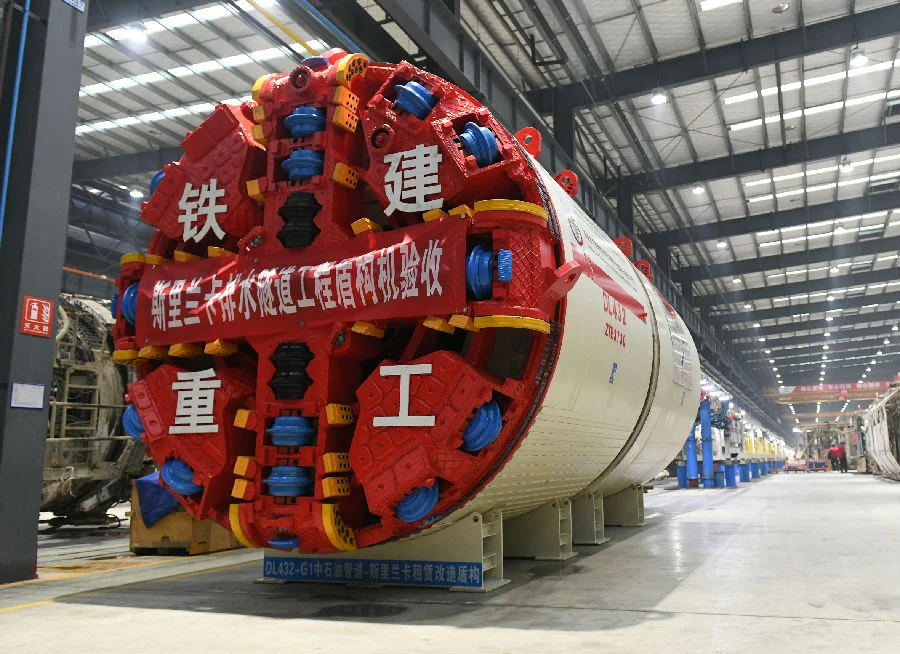
While the export milestone itself has been widely noted, the engineering significance of this machine lies in its adaptation to a combination of geological and geometric constraints that are unusual for a TBM of any size. This article examines the technical challenges of the project—extremely hard rock and an exceptionally tight minimum curve radius—and explains how the machine's design responds to those conditions. It is intended for tunnelling engineers, equipment selectors, and project planners who need to understand the practical limits of micro-TBM technology and the factors that drive customisation in small-diameter machines.
Project Background and Scope
The New Mutwal and Torrington drainage project is part of Sri Lanka's efforts to improve stormwater management in Colombo. The city's existing drainage network in these areas is unable to handle peak flows during the monsoon season, leading to regular flooding. The project is being executed by China Petroleum Pipeline Engineering (CPPE), with CRCHI supplying the TBM. The machine is a micro-tunnel boring unit with a diameter of 3.7 metres and an overall length of 120 metres, including the cutterhead, shield, and back-up system.
According to project information, the tunnel alignment passes through gneiss and other very hard rock formations with a compressive strength of up to 150 MPa. In addition, the minimum horizontal curve radius along the alignment is 80 metres, compared with a more typical minimum of 250 metres for shield-driven tunnels. These two conditions—high rock strength and tight curvature—jointly define the machine's design requirements.
Geological Challenge: Tunnelling in 150 MPa Rock
Rock with a uniaxial compressive strength (UCS) of 150 MPa is classified as very hard. For comparison, many conventional EPB shields are designed for soft to medium-hard ground with UCS values well below 100 MPa. Tunnelling in such hard rock with an EPB machine requires careful attention to cutter wear, cutting efficiency, and the ability to transmit sufficient torque and thrust without overloading the machine structure.
The TBM supplied for the Sri Lanka project incorporates several features to address these conditions. The cutterhead and screw conveyor are equipped with special wear protection. The cutterhead is fitted with reinforced and impact-resistant cutters, and the gauge cutters (those on the periphery) include an overcut device to maintain the required tunnel diameter as the cutters wear. The main drive uses multiple hydraulic motors arranged to provide high torque and resistance to impact loads. These measures are consistent with established practice for hard-rock EPB tunnelling, where cutter life and torque availability are critical to productivity.
It is important to note that the machine is an EPB design, which uses a pressurised excavation chamber filled with excavated material to support the face. In hard rock, EPB operation can be challenging because the muck may not flow easily and the face may not require the same level of support as in soft ground. However, EPB machines are frequently used in mixed conditions and can be adapted for hard rock with appropriate cutter design and operational parameters. The project will provide a useful reference for future applications of micro-EPB machines in similar geology.
Navigating an 80-Metre Curve Radius
The minimum curve radius of 80 metres is a more distinctive constraint. Shield-driven tunnels typically have minimum radii of 250 metres or more because the long, rigid shield body must follow the curve without excessive steering forces or overcut. When the radius is reduced to 80 metres, the shield must be articulated to negotiate the bend.
The CRCHI machine addresses this by dividing the shield into two sections—a front shield and a tail shield—connected by a spherical hinge. The articulation is controlled by four groups of eight active articulation cylinders, which allow the operator to adjust the angle between the two shield sections. This design enables the machine to steer through the tight curve while maintaining the required line and grade. In addition, the belt conveyor is equipped with an adjustment device to accommodate the curvature and prevent spillage or misalignment.
The combination of a small diameter and a tight curve radius also affects the layout of internal components. With limited space, the backup system and support equipment must be arranged to fit within the shield and follow the curve without interference. This requires close integration of mechanical, electrical, and hydraulic systems, and often leads to customised components.
Design Adaptations for a Micro TBM
Micro TBMs, generally defined as machines with a diameter below 4 metres, present specific design challenges. The internal space is too small for personnel to move freely, and standard components such as segment erectors, control cabinets, and ventilation equipment must be scaled down or reconfigured. For the Sri Lanka machine, the following adaptations are notable:
Segment feeding: A custom segment feeder with a walking and lifting function was developed to transport precast concrete segments from outside the shield to the erector, enabling efficient segment installation in the confined space.
Operator cabin: The control room is designed with a car-like layout to provide a comfortable and safe working environment for the operator, despite the limited space.
Safety: A manlock (human airlock) system is installed to allow safe cutter replacement under compressed air, if required. This is a standard safety feature for EPB machines but is particularly important in small tunnels where access is difficult.
These adaptations reflect the principle that in micro-tunnelling, every component must be engineered to fit the available space without compromising functionality or safety. The development and manufacturing period for this machine was approximately two and a half months, according to the project manager, which indicates a high degree of customisation and intensive production effort.
Implications for Future Micro-Tunnelling Projects
The export of this TBM to Sri Lanka highlights several trends relevant to the international tunnelling market. First, urban drainage and utility tunnels often require small-diameter machines that can navigate congested underground space and tight curves. Second, the ability to customise micro TBMs for specific geological and geometric conditions is a key competitive factor for equipment suppliers. Third, the project demonstrates that Chinese manufacturers are increasingly capable of meeting the technical requirements of international projects, including those with challenging conditions.
For project planners, the case illustrates the importance of early geological and alignment assessment. The combination of hard rock and tight curves should be identified during feasibility studies so that machine specifications can be tailored accordingly. It also underscores the need for close collaboration between the machine supplier and the construction contractor to ensure that the TBM's capabilities match the project demands.
While the Sri Lanka project is a single case, it provides a useful reference for similar projects in South Asia and other regions with hard rock and constrained alignments. The design solutions—articulated shield, custom segment feeding, and reinforced cutting tools—are likely to be applicable to other micro-tunnelling projects facing comparable challenges.
Sources and References
Frequently Asked Questions
What is the significance of the 80-metre curve radius for TBM design?
An 80-metre radius is much tighter than the typical minimum of 250 metres for shield-driven tunnels. It requires an articulated shield with active articulation cylinders to allow the machine to bend, as well as adjustments to the backup system to follow the curve. This increases design complexity and may limit the machine's ability to operate in other projects with different alignments.
How does a micro TBM differ from a standard TBM?
Micro TBMs have diameters below 4 metres, which severely restricts internal space. This necessitates customised components, such as compact segment feeders and control cabins, and may require remote monitoring or automated systems. Maintenance access is also more difficult, so reliability and ease of maintenance are critical design considerations.
Can an EPB machine effectively bore through 150 MPa rock?
EPB machines can be used in hard rock, but they require robust cutter designs, high torque, and wear protection. The 150 MPa rock in this project is at the upper end of what EPB machines can handle economically. Performance will depend on cutter life, machine thrust, and operational adjustments. It is not a universal solution for all hard-rock conditions; hard-rock TBMs (gripper or single-shield) are often more efficient in very hard, massive rock.
What are the main risks in micro-tunnelling projects?
Key risks include limited space for personnel and equipment, difficulty in cutter replacement, potential for steering deviations in tight curves, and challenges in muck removal. Thorough geological investigation, careful machine selection, and contingency planning for cutter wear and breakdowns are essential.

- Inside the 14,000-Tonne Ring-Rail Crane: How Ultra-Heavy Lifting Is Changing Nuclear Construction
- Robotic Cutter Changing for TBMs: Automating Disc Replacement in Large-Diameter Tunneling
- China's First TBM Export to Sri Lanka: Engineering a Micro Shield for Hard Rock and Tight Curves
- Mixed-Face Tunnelling in Clay, Silt and Sand-Gravel: Engineering Lessons from a 12.49 m EPB TBM