
New Products & Technology
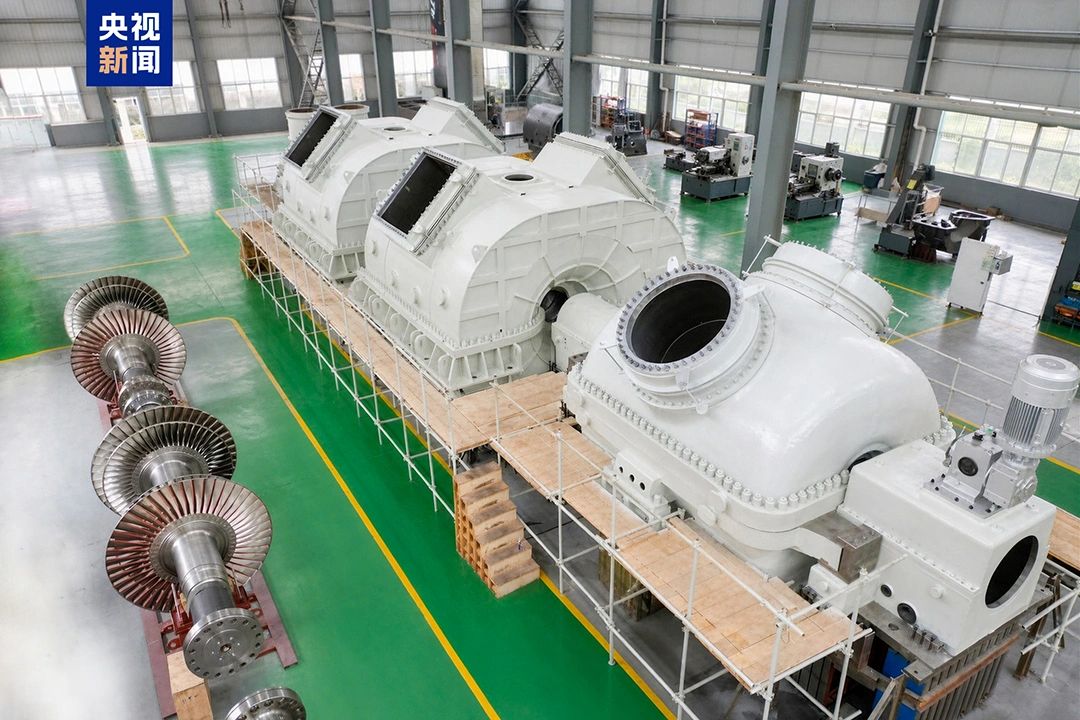
China's First 600 MW-Class CAES Expander Completes Integration Testing
Introduction
Compressed air energy storage (CAES) is one of the few large-scale mechanical storage technologies that can shift bulk electricity across hours rather than minutes. On November 26, 2026, Chinese media reported that the first 600 MW-class CAES expander developed by the Institute of Engineering Thermophysics (IET) under the Chinese Academy of Sciences, together with Zhongchu Guoneng (Beijing) Technology Co., Ltd., completed integration testing and rolled off the production line. The announcement matters less as a single machine milestone and more as a signal about how utility-scale CAES is being engineered: toward larger unit ratings, variable-speed operation and broader load flexibility.
For engineers, procurement teams and grid planners outside China, the key question is what a 600 MW-class expander implies for system design, cost structure and the practical boundaries of CAES as a storage option.
What the 600 MW-Class Expander Announcement Actually Covers
According to the report, the expander is described as the world's first 600 MW-class unit for a CAES system and carries 100% independent intellectual property. The developer states that integration and mechanical testing have been completed, with all test results meeting or exceeding design targets. Reported characteristics include high integration, high efficiency, fast start-stop capability, long service life and ease of maintenance, with a claimed 100% equipment localization rate.
The reported performance comparison against 300 MW-class systems is notable:
System scale approximately doubled.
Unit power cost reduced by 20% to 30%.
System efficiency improved by 3 to 5 percentage points.
These figures are developer claims tied to a specific development program. They should be read as design targets and reported outcomes rather than independently verified field performance. The announcement does not disclose the expansion ratio, inlet and outlet temperatures, pressure ratios, stage count, rotor dynamics or expected annual degradation, which are the parameters engineers would normally need for a rigorous comparison.
Why the Expander Is the Critical Component in CAES
A CAES system stores energy by compressing air into a reservoir, whether a salt cavern, an abandoned mine or a pressure vessel. During discharge, the stored high-pressure air is heated and expanded through a turbine train to drive a generator. The expander therefore converts the pressure and thermal energy accumulated during charging back into electricity, and its efficiency directly shapes round-trip efficiency.
In advanced adiabatic CAES designs, heat released during compression is captured in thermal storage and returned to the air before expansion, avoiding combustion of natural gas. The expander in such a system must handle high-pressure, high-temperature air across a wide operating range. That combination is what makes large expanders difficult to design: the aerodynamic profile optimized for one operating point may perform poorly at part load, and the mechanical structure must tolerate rapid thermal transients during start-up and shutdown.
Technical Challenges Behind a 600 MW-Class Machine
The report identifies several development challenges addressed by the team over roughly two years: full three-dimensional aerodynamic design across all operating conditions, a multi-stage long-shaft rotor structure, and combined dynamic control of variable geometry and variable speed. Each corresponds to a recognizable engineering problem in large turbo machinery.
Aerodynamic Design Across the Operating Envelope
A CAES expander rarely operates at a single design point. Grid dispatch signals, storage state and thermal storage temperature all vary. Designing blading that maintains acceptable efficiency at partial load, while avoiding flow separation and excessive secondary losses, requires full three-dimensional CFD optimization rather than two-dimensional cascade methods. Variable geometry, such as adjustable guide vanes, is a common approach in industrial gas and steam turbines to extend the efficient operating range, and the report indicates that variable geometry is part of the control strategy here.
Long-Shaft Rotor Dynamics
Scaling from 300 MW to 600 MW typically increases stage count and shaft length. Longer, more flexible rotor trains shift natural frequencies and can bring operating speed ranges closer to critical speeds. The reported multi-stage long-shaft structure implies that rotor dynamics, bearing selection and thermal growth management were central design tasks. The announcement does not specify whether the rotor uses rigid or flexible coupling, which bearing types are employed, or how many stages are involved.
Variable Speed and Variable Geometry Control
Combining variable speed with variable guide vanes gives operators two levers to match load while keeping the expansion process efficient. It also complicates control logic, because speed and vane position interact with pressure ratios and thermal storage conditions. The reported fast start-stop capability is consistent with a design intended for flexible grid services rather than baseload operation only.
Scale Effects: What Doubling Unit Rating Changes
The reported 20% to 30% reduction in unit power cost follows a familiar pattern in turbomachinery. Larger flow areas reduce relative losses at blade tips and seals, and the cost of casings, bearings and auxiliary systems is spread over more output. However, scale also raises manufacturing, transport and lifting constraints, and the structural demands on the rotor increase nonlinearly.
The reported 3 to 5 percentage point efficiency gain should be interpreted carefully. It may reflect reduced relative losses, improved aerodynamic matching or lower auxiliary consumption, but the announcement does not break down the contribution of each factor. For project developers, the more relevant question is how the efficiency holds at part load, since CAES plants are often dispatched flexibly.
Practical Implications for Storage Project Developers
A 600 MW-class expander points toward CAES plants with larger single-train capacity. That has several practical consequences:
Fewer parallel trains: fewer units can reduce balance-of-plant complexity and maintenance touchpoints, though redundancy strategy must still be considered.
Grid-scale services: fast start-stop and wide load range support frequency regulation and peak shaving, not only bulk energy shifting.
Supply chain localization: the claimed 100% domestic content reflects a Chinese supply chain; projects elsewhere would need to assess spare parts, service access and qualification of local manufacturers.
Reservoir coupling: the expander is only one subsystem; cavern or vessel availability, thermal storage design and compressor matching determine overall plant performance.
Readers evaluating CAES against lithium-ion or pumped hydro should note that the announcement provides no levelized cost of storage, cycle life or degradation data. Those metrics require full plant operating experience, which a factory test does not provide.
What Remains Unverified
The report describes integration and mechanical testing, not long-term grid operation. Mechanical tests confirm structural integrity and basic function; they do not establish round-trip efficiency in service, availability, or maintenance intervals. The comparison with 300 MW-class systems is stated without specifying whether it refers to the same configuration, thermal storage arrangement or operating profile. International readers should treat the cost and efficiency figures as reported program targets until independent operating data become available.
Outlook for Utility-Scale CAES
The direction of development is clear: larger unit ratings, variable-speed flexibility and higher integration. Whether 600 MW-class machines become a standard building block depends on cavern geology, grid market design and the willingness of utilities to commit to a technology with limited operating history at this scale. The expander milestone removes one component-level barrier; system-level validation in commercial operation is the next test.
Sources and References
Frequently Asked Questions
What is a compressed air energy storage expander?
It is the turbine that expands stored high-pressure air to drive a generator, converting the pressure and thermal energy held in the storage system back into electricity during discharge.
Does the 600 MW-class expander mean a 600 MW plant is operating?
No. The report describes a completed expander that passed integration and mechanical testing. It does not confirm that a full 600 MW plant is in commercial operation.
Why is variable-speed operation important for CAES?
It allows the expander to follow load changes and maintain efficiency across a wider operating range, which matters for flexible grid services rather than constant baseload output.
Are the reported cost and efficiency figures independently verified?
The figures are reported by the developing organizations. The announcement does not provide independent verification or detailed test conditions, so they should be treated as reported design outcomes.

- World's Largest Hydropower Pressure Relief Valve Completed for Pakistan's Tarbela Project
- Carbon Fiber Crossbeams and High-Speed Laser Cutting: Engineering Trade-offs for Metal Fabricators
- Advantages of Bevel Fiber Laser Cutting Machines in Thick-Plate Fabrication
- Chitian Launches 176-Tonne Battery-Electric Rigid Mining Truck